
Waiting to Be Asked
On my daughter discovering the guitar and exploring open-D tuning on a family heirloom, along with her requested transcription of the Longest Johns’ arrangement of “Fare Thee Well (Dink’s Song).”

Ever since becoming a father, I had quietly hoped that one of my children might someday take to the guitar as I had decades earlier. After years of music lessons on other instruments, I had mostly accepted that this was unlikely to happen. Then, around the time my daughter, Lake, turned 14—the same age I was when I got my first guitar—she took a sudden and unexpected interest in the instrument.
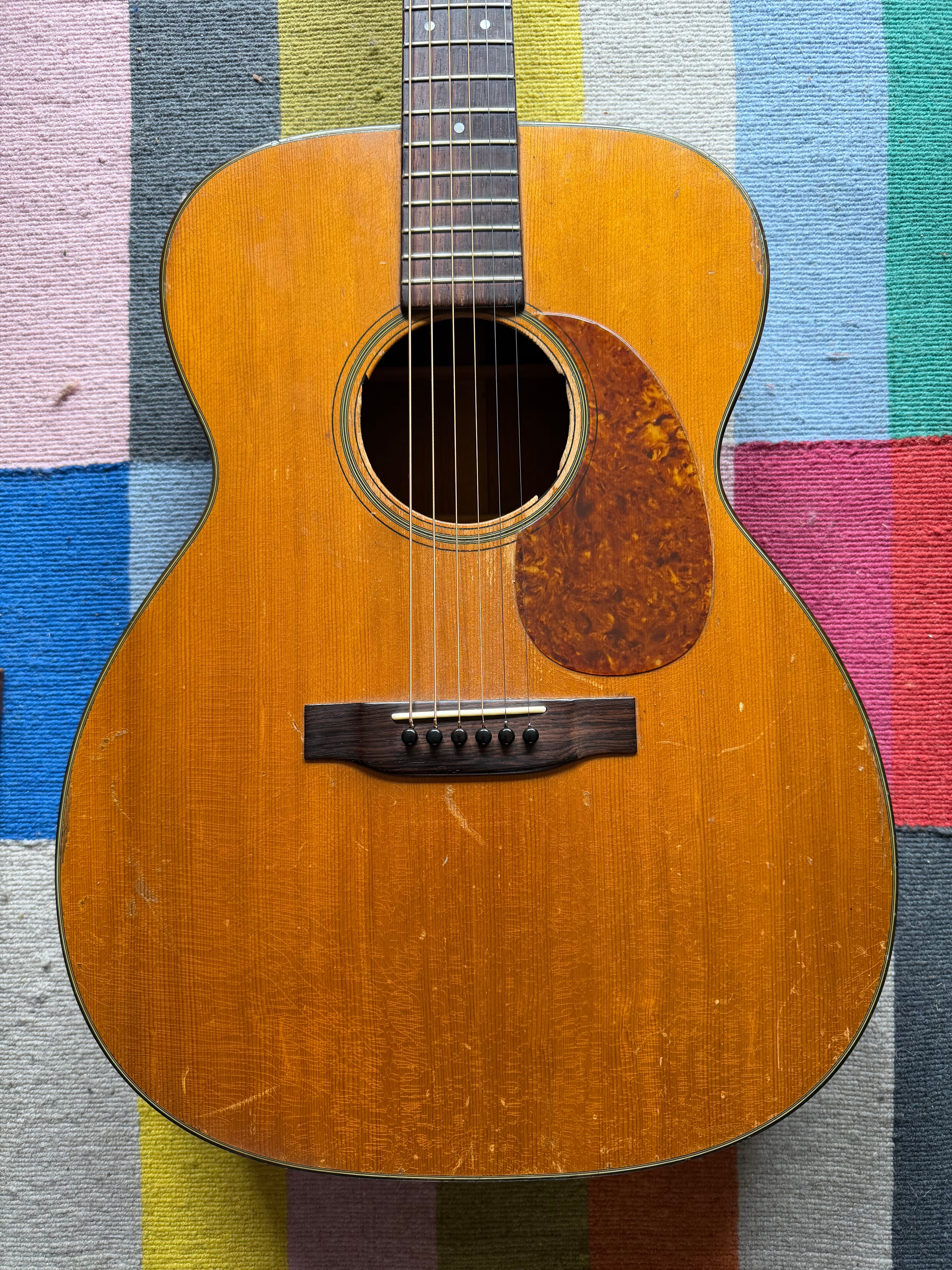
Lake had a leg up on many young players, having taken cello lessons for years and been given access to a guitar that is hardly a beginner instrument: a well-loved Martin 000-18 that her grandfather bought new in 1956 with money earned from newspaper routes, and which eventually will go to the grandchild with the greatest affinity for the guitar. Needless to say, I am quietly rooting for Lake.
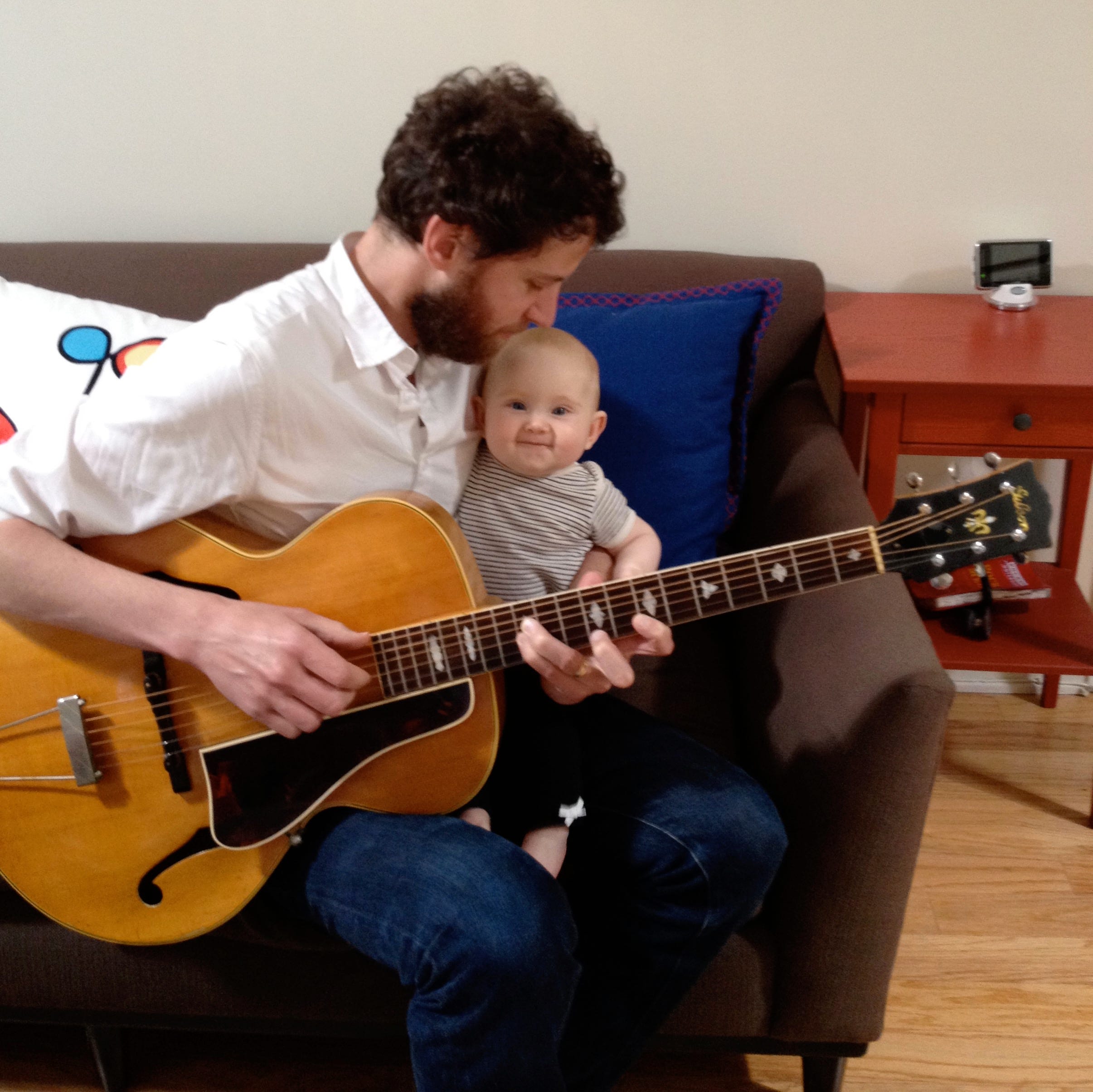
It’s been beautiful to watch Lake learn an instrument whose layout is entirely different from the cello’s, and to see her begin connecting the dots between songs, styles, harmonic movement, and techniques. I’ve also been struck hearing her lament not having a guitar on vacation—something I remember feeling acutely at her age.
Just as gratifying has been watching her gravitate not toward whatever music happens to dominate among her peers and the airwaves, but toward whatever genuinely catches her ear. So far that has meant everything from metal tunes like “Nothing Else Matters” by Metallica to folk songs like “Both Sides Now” by Joni Mitchell.
As she plays, I am frequently tempted to offer well-meaning suggestions—small corrections, alternate fingerings, shortcuts that might make things easier. My wife always stops me. She feels it’s better for Lake to discover things on her own, to overcome struggles and develop her own relationship with the instrument. When I mentioned this to a friend who has retired from music publishing and now runs a community music school in the Bay Area, he agreed.
“Let her come to you,” he said.
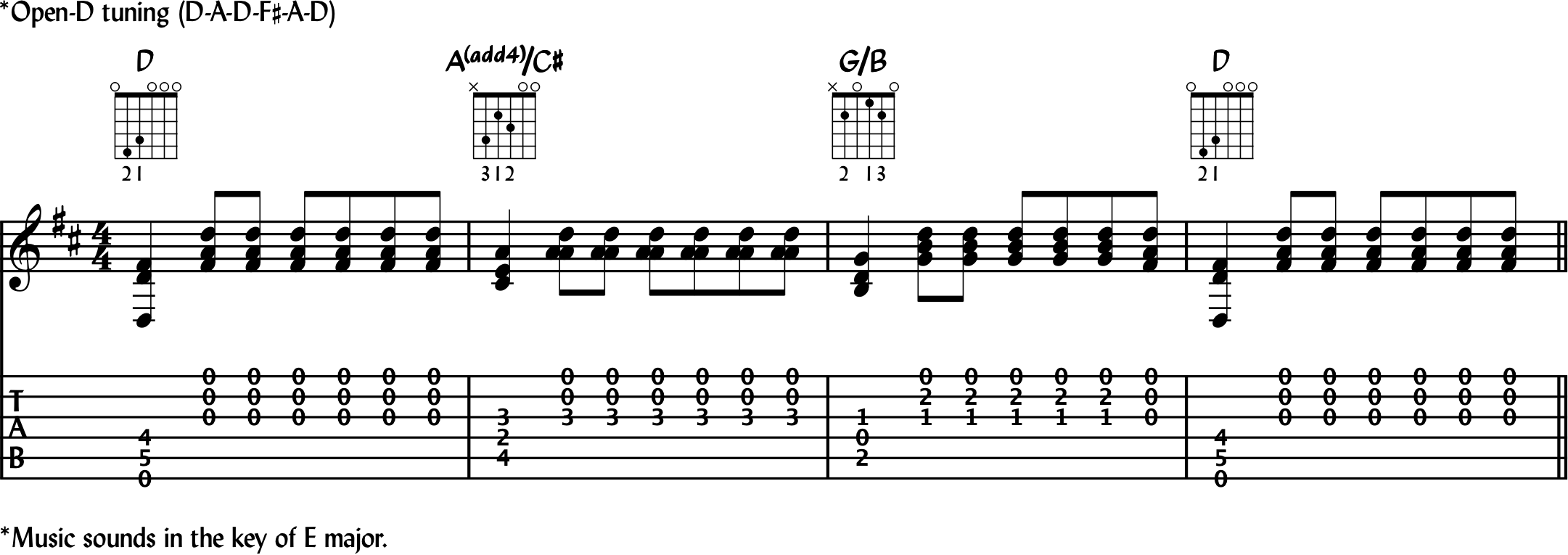
So I was especially pleased when Lake did just that the other week with a question about open-D tuning after learning “Both Sides Now.” She had become curious about “Shelter from the Storm,” from Blood on the Tracks, but the charts she found online didn’t sound right—cowboy chords in standard tuning that clearly weren’t capturing the more colorful and resonant sound of the studio recording.
I was proud of her for noticing, and I jumped at the opportunity—not just to help but to be something other than weird and embarrassing, if just in passing. I jotted down the progression below in the style of Bob Dylan’s guitar part, played not in standard tuning but in open D with a capo at the second fret.
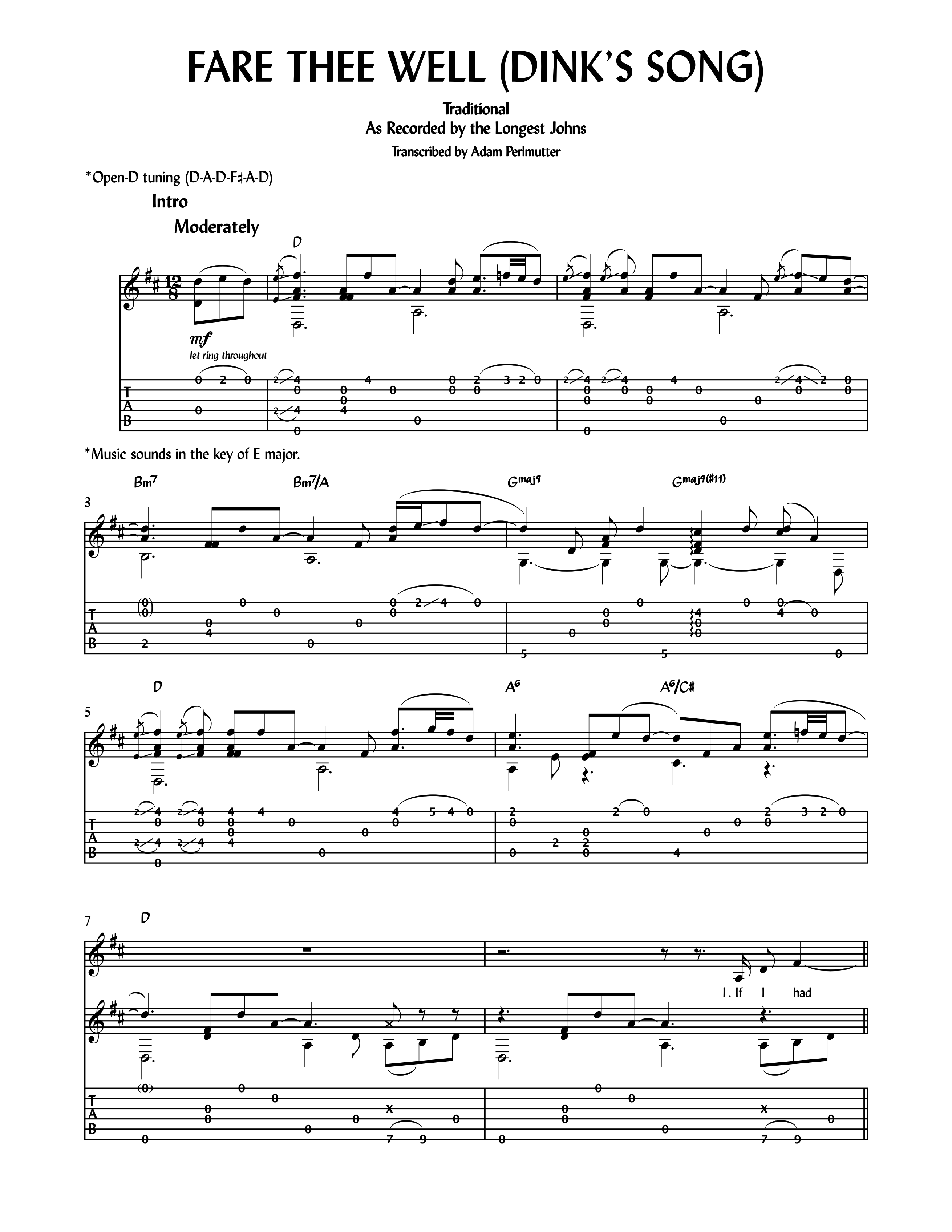
In the last few years, Lake has also become a big fan of sea shanties, particularly as sung by the British folk band the Longest Johns. She recently discovered the group’s arrangement of the traditional song “Fare Thee Well (Dink’s Song),” which is also played in open D, capo II, and found some tablature online.
Like so much internet notation, it was crude and only loosely related to what was actually being played. I was pleased, to say the least, that she had already begun recognizing this for herself, just as I had with songbooks at her age.
Though it’s often hard to justify the time required to notate songs properly for usage outside of professional life, I took Father’s Day as an excuse to transcribe the arrangement, with its simple shapes but colorful chords, as heard on the Longest Johns’ 2023 collection, C-Sides. I am hoping that Lake will eventually ask me what all those unfamiliar chord symbols mean and how they work.

What I’ve come to understand is that passing on music, at least in my case, has less to do with instruction than with presence and availability. Much as I may want to explain or clarify, most of that only matters when the invitation comes. Until then, perhaps the best thing I can do is keep the guitars nearby and be ready when curiosity strikes.
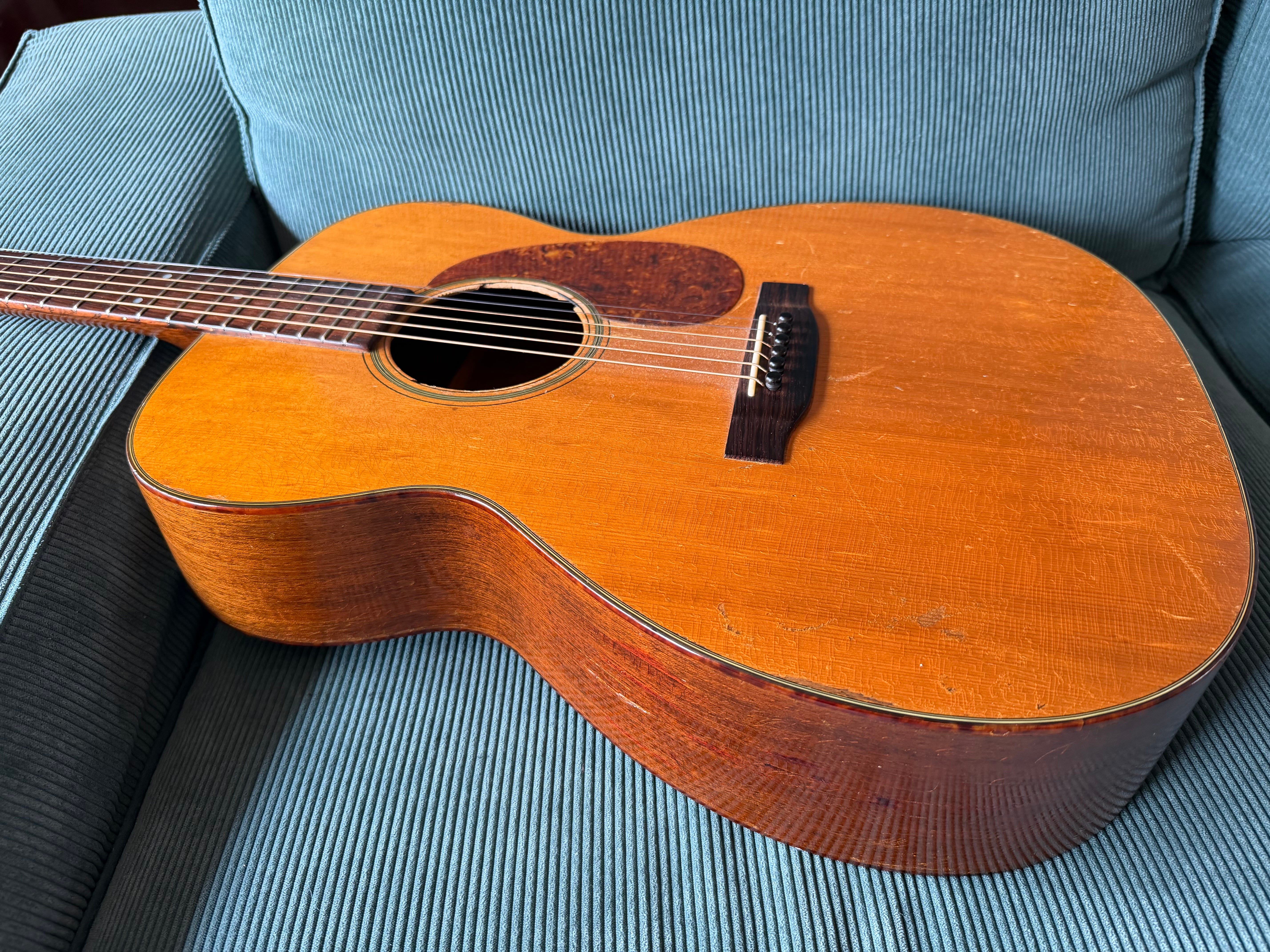
And there’s something especially moving about watching the old Martin that belonged to Lake’s grandfather in her hands. A guitar bought 70 years ago with paper-route money has somehow found its way to another generation of player. I have no idea whether the instrument will become a lasting part of Lake’s life—and it’s not up to me—but for now it feels meaningful enough just to see that instrument making this particular journey.